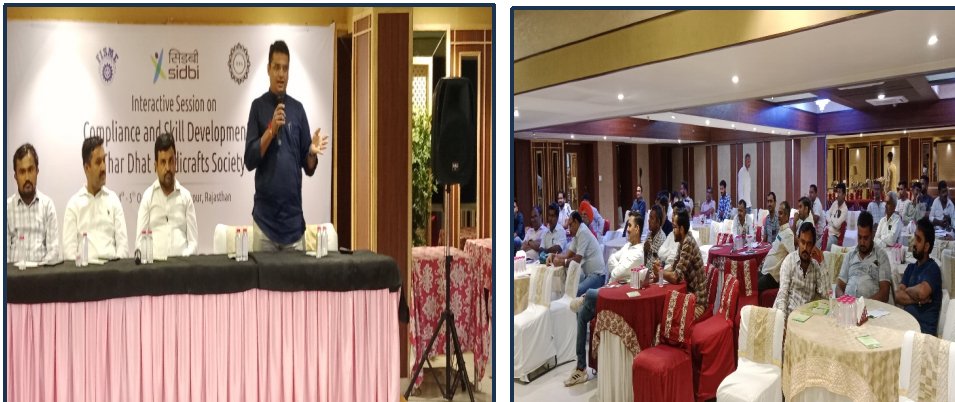
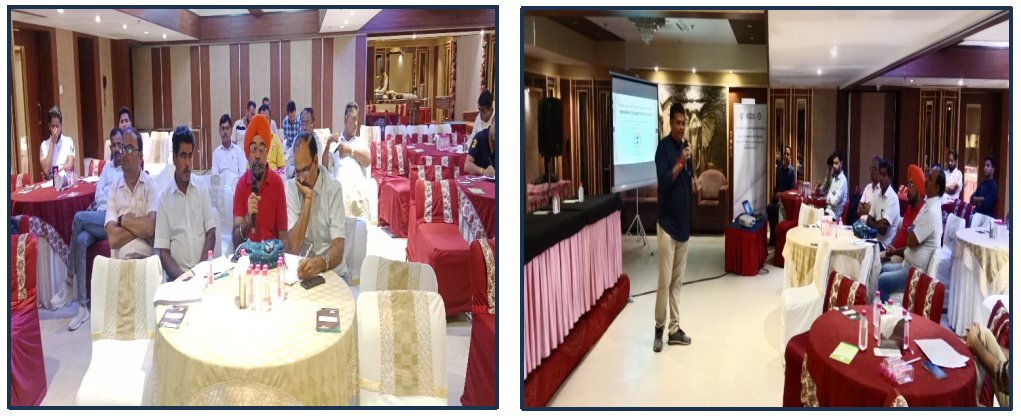
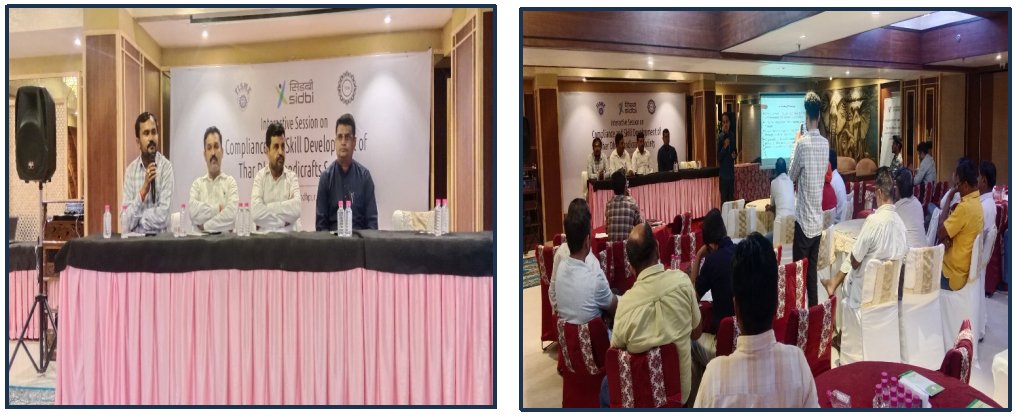
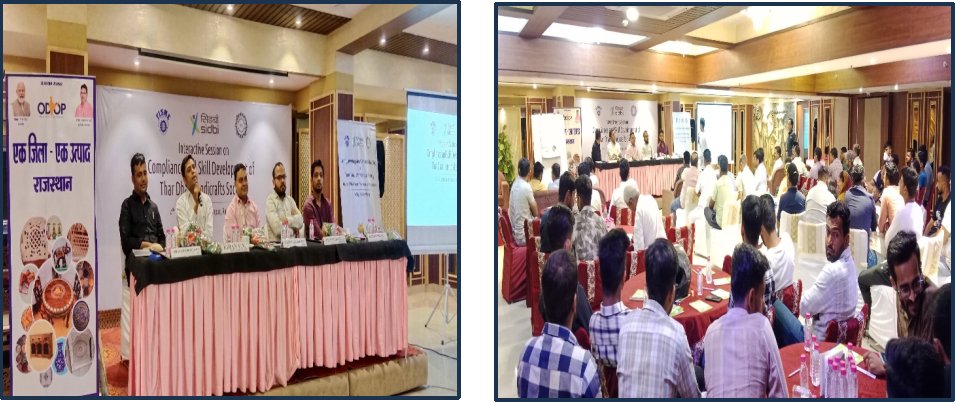
The 2-day event organized for the members of the Thar Dhat Handicrafts Society on October 4th and 5th, 2024, was a significant milestone in fostering collaboration and enhancing knowledge among its members. Held at Hotel Shri Ram Excellence, the event witnessed participation from over 130 members, marking a robust gathering of artisans dedicated to the handicrafts sector. This comprehensive workshop not only aimed at disseminating vital information but also sought to empower members with the tools they need for business growth. The primary objective of the workshop was to provide in-depth knowledge regarding various government schemes and financial assistance available to artisans. In addition, the event placed a strong emphasis on skill development, which is crucial for entrepreneurs in the handicraft sector. Such initiatives play a pivotal role in equipping members with essential resources, enabling them to advance their businesses effectively.
The event featured prominent speakers, including Mr. Gyanendra Bharti and Mr. Hitesh Dave from the Small Industries Development Bank of India (SIDBI), as well as Mr. Kiran VN, Assistant Director from the Development Commissioner (Handicrafts). District Industry Officers Mr. Jitaram Chaudhary and Mr. Omprakash Lega also contributed valuable insights. Their presence underscored the collaboration between various governmental bodies and the handicraft community.
Additionally, Chartered Accountant Mr. Ashish Mishra provided essential information about navigating the GST portal, helping members understand tax compliance and its implications for their businesses.
The first day of the program was meticulously planned, filled with informative sessions designed to empower members. Officials from SIDBI discussed critical topics such as machinery loans, project funding, and special financial schemes. These insights were vital for the members, equipping them with the knowledge to enhance and expand their business operations.
Following this, the District Industries Centre representatives detailed various government schemes, which are crucial for artisans:
- PMEGP Scheme: This initiative supports new entrepreneurs in generating employment by providing financial assistance.
- Mudra Loan: Designed for small businesses, this scheme simplifies access to financial support without cumbersome processes.
- Dr. Bhimrao Ambedkar Dalit Adivasi Udham Protsahan Yojana: Aimed at empowering Dalit and tribal entrepreneurs, this scheme offers them financial backing and encouragement.
Additionally, officials from DC(H) highlighted essential schemes such as:
- Artisan Card Grant: This initiative supports artisans engaged in producing handmade products, facilitating their access to resources.
- PM Vishwakarma Yojana: Focused on the development of artisans, this scheme provides technical support and training to enhance their skills and productivity.
- Mudra Loan Scheme: This helps members to get the required finance for their business.
The day concluded with a comprehensive session on the GST portal, where Mr. Ashish Mishra elucidated the nuances of tax regulations and compliance. His insights were invaluable, enabling members to better understand and navigate the tax landscape essential for their businesses.
At the end of the program, there was also a Q&A session between the officials and the members.
Photos:-

Day 2: Focus on Skill Development at Thar Dhat Handicraft Society Event
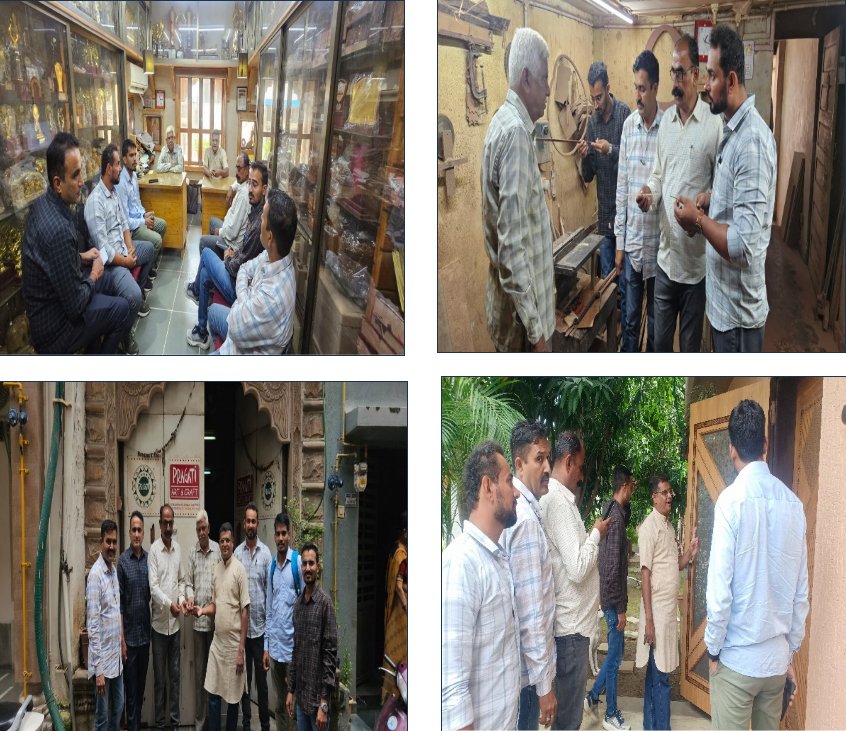
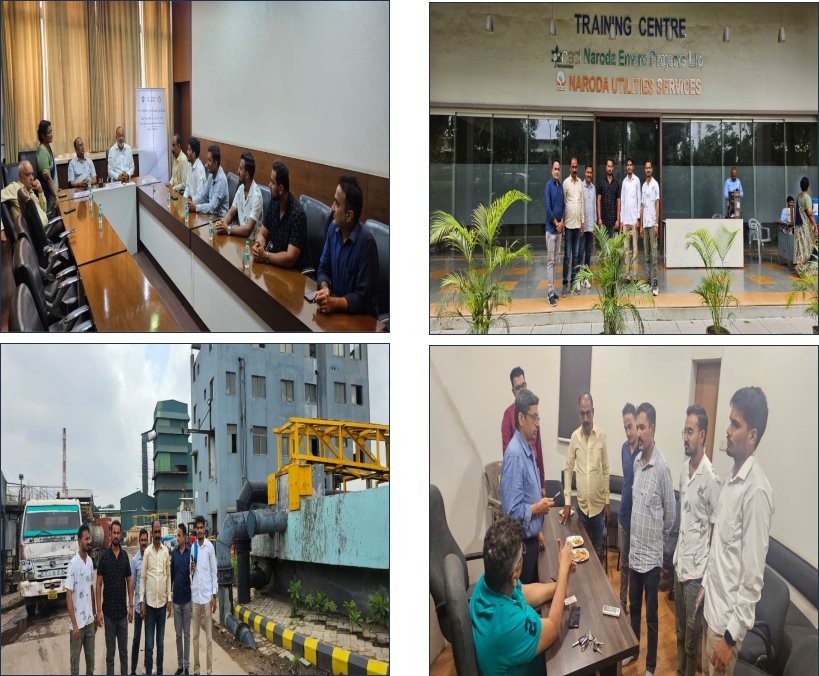
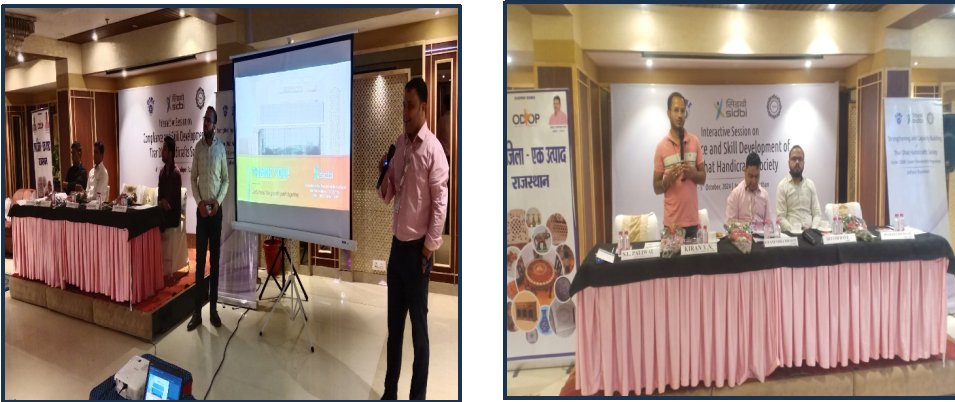
On the second day of the workshop, Mukesh Parihar (Executive Secretary, Secretariat TDHS) delivered a comprehensive presentation on the achievements of the Thar Dhat Handicraft Society. He highlighted the recent onboarding of new members, showcasing the society’s expanding network and the influx of diverse talent. Mukesh also discussed a three-day training program organized by FISME for the secretariat staff, aimed at enhancing their administrative and managerial skills to better support the society’s initiatives. Additionally, he shared insights from an exposure visit that member undertook to the Delhi NCR and Gujarat regions. This visit allowed participants to learn from established artisans and explore successful market practices, fostering inspiration and practical knowledge. Overall, Mukesh’s presentation illustrated the society’s commitment to growth, skill development, and the empowerment of its members through training and collaborative experiences.
The second day of the Thar Dhat Handicraft Society event was entirely dedicated to skill development, a crucial aspect for artisans seeking to enhance their craft and vocational skills. The day featured a dynamic session led by Mr. Rakesh Petigara, a renowned trainer from Surat, Gujarat, who introduced the members to a variety of skill enhancement techniques that are essential in today’s competitive market.
Skill Development Session
Mr. Petigara’s session was multi-faceted, focusing on several key areas:
Skill Development Techniques: He covered various innovative techniques that can greatly improve the craftsmanship of artisans. By introducing modern methods, he aimed to help members hone their skills, making their work more efficient and effective.
Product Finishing: Understanding the importance of product presentation, Mr. Petigara emphasized on finishing techniques that enhance the aesthetic appeal of handmade products. This knowledge is crucial for artisans as it directly impacts the marketability of their goods.
Marketing Strategies: Understanding that skills alone are not enough for success, Mr. Petigara shared valuable information about effective marketing strategies. He discussed how artisans can leverage social media, online platforms and local markets and participate in exhibition to promote their products and reach a wider audience.
New Designs: To stay relevant in the market, artisans need to constantly innovate. Mr. Petigara introduced members to current design trends and encouraged them to experiment with new ideas, thereby boosting creativity and uniqueness in their work.
This session was particularly rewarding as it equipped members with practical knowledge that they could immediately implement, improving both their skills and business strategies.
After the skill development training, the event turned into a lively Q&A session. This interactive segment gave members a chance to directly engage with the trainers and officials, ask questions and seek clarifications on various topics discussed in the workshop.
Photos:-